Lego Serious Play
Building with the hands to free up thinking. Teams make abstract questions literally tangible, and so easier to discuss.
Our method is built on two solid pillars: years of experience with team development and the scientifically validated TeamFlow model. In practice we see how teams get stuck, where energy arises and what is needed to really improve collaboration. Below you read what science teaches us about teams in flow, how the model is built and how TeamPacer relates to other methods.
Book an exploratory callWe know the feeling of a team that really runs, from the sports field, higher education and the workplace. And we know how big the difference is with a team that works past each other. That difference is not coincidence or magic: it can be measured, understood and improved.
Experienced Pacers, Trainers and Coaches help teams take their collaboration to a higher level. We combine practical experience with solid knowledge of team dynamics.
Thanks to differences in background and expertise, we can offer the support that fits best for every development theme.
Guides teams through the full TeamPacer approach: from measurement and analysis to workshop, working agreements and follow-up.
Delivers focused team sessions or workshops around specific themes, such as communication, collaboration or leadership.
Supports individuals or teams with reflection, development and strengthening behaviour in practice.

Trainer
“The best moment as a coach is not the championship itself. It is the match in which you see the team find each other blindly, when everything clicks. I wish every team that moment, in the office too.”
Erik brings the world of elite sport to teams that want to perform better together. As a former head coach at the highest level of field hockey, he knows how important trust, clarity and shared ambition are for a team to keep growing. In 2026 he led the men of Rotterdam to the Dutch national hockey championship as head coach.
He has an eye for talent and quickly sees where collaboration is strong and where it gets stuck. With calm, experience and a clear focus on development, he helps teams take ownership, make better use of each other and move towards results with more confidence.
Trainer
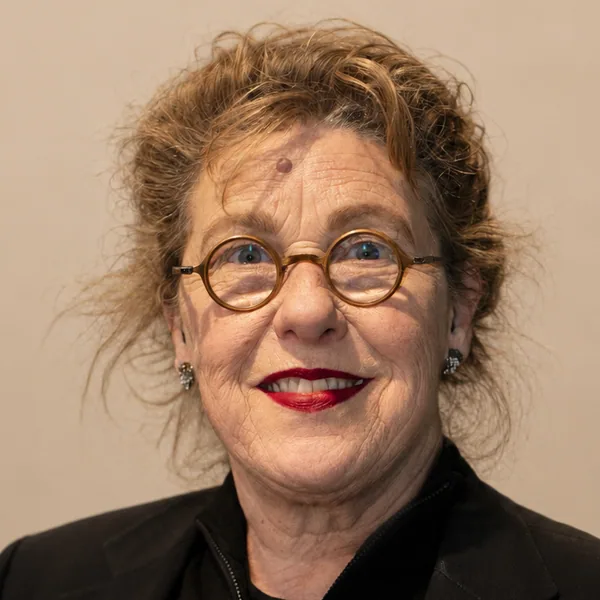
“In education I learned that a group only changes when everyone feels safe enough to take part. That applies in the classroom and just as much at the meeting table.”
With her rich background in education and years of experience in guiding teams, she helps groups to truly work together. She listens sharply, analyses patterns quickly and makes complex dynamics understandable with visual coaching methods.
Empathetic and connecting, she creates a safe context in which teams take the wheel themselves. Her approach is characterised by clear observation, human attention and a clear focus on results.

Coach
“A team gets stronger when every team member is in their element. Sometimes one good conversation with one person is exactly what sets the whole dynamic in motion.”
Hermione specialises in individual coaching within teams. Sometimes team dynamics do not call for a team intervention, but for focused attention for one team member: someone who is stuck, in doubt, or ready to take a next step. As an ICF-certified Professional Certified Coach she helps people come into their own, with insight into what really matters to them and which choices fit.
With her background in HR and Learning & Development at international organisations such as Ernst & Young and Randstad, she knows how individual growth and team performance are connected: when the right people are in the right place and feel good there, the whole team moves forward.
Pacer
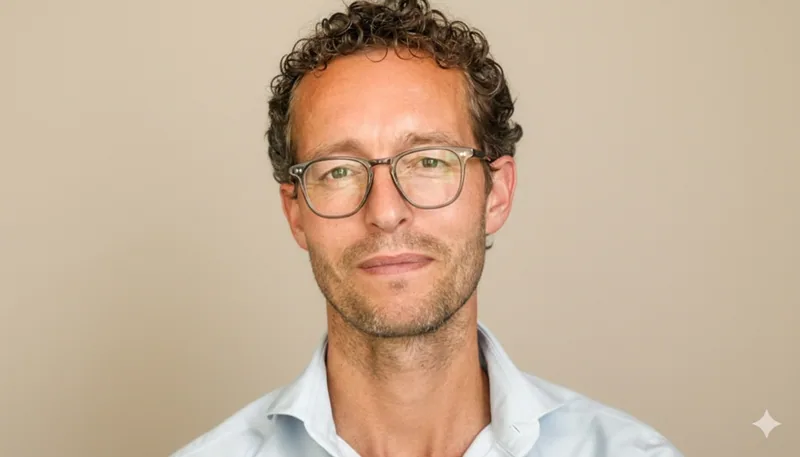
“I love the moment when the numbers open up the conversation. Not because data is sacred, but because it shows where things get stuck.”
Justin is a specialist in team dynamics and collective performance. His experience in business, education and research means he likes to dive into the numbers, to discover patterns and understand why teams flourish and sometimes get stuck.
With his passion for (team) sport he knows how important rhythm and collaboration are. His enthusiasm and humour are infectious; he brings people together and helps teams arrive at improvements themselves, and enjoy doing it.
Our people differ not only in background, but also in the methods they master. We have a wide range of expertise and skills in house. No fixed method that we apply everywhere, but a broad palette from which we choose what fits your team, the question and the moment. A selection of what we use:
Building with the hands to free up thinking. Teams make abstract questions literally tangible, and so easier to discuss.
We also bring the quieter and dissenting voices into view, because that is often where the most wisdom lies. This produces decisions that the whole team truly supports.
What makes a top team run, translated to the workplace: rhythm, sharpness, trust and the will to win together.
Personal support for the individual within the team, focused on strengths, choices and the next step.
Making patterns and insights visible in images, so the conversation becomes concrete and the team has the same picture in mind.
Reviewing the interplay with video recordings. What happens in the interaction becomes concretely visible, so learning and adjusting become tangible.
Teams perform structurally better when they:
That is why we do what we do: bringing teams into flow, so that both the organisation and its people move forward.
Everyone knows the feeling of flow: being so absorbed in what you do that everything seems to run by itself. That exists at team level too. The TeamFlow model, developed and scientifically validated by Dr Jef van den Hout, describes what that shared experience is made of: seven conditions that make team flow possible and four characteristics by which you recognise it. These are the eleven axes on which every TeamPacer measurement is built.
The building blocks that make team flow possible; this is where the influence lies.
The recognisable signals that a team is in flow. The effect, not the cause.
Good to know: team flow is not a constant. The experience fluctuates; even strong teams are not in flow all the time. That is exactly why regular measurement is so valuable.
You cannot order a team to trust each other or to feel as one. These characteristics only arise when the underlying conditions are in order. What you can do: build purposefully on the conditions that lag behind. That is where most movement comes from.
That is why we measure both. The characteristics tell how the team experiences the collaboration right now; the conditions tell what you can work on to strengthen that experience.
Three examples from the questionnaire
Within our team...“We all feel safe to take risks.”
Within our team...“We give each other feedback whenever we can.”
Within our team...“Personal goals are compatible with those of the team.”
Team members score the statements anonymously. The results are analysed exclusively at team level, without individual profiles or labels.
There are different ways to work on team development. Many methods look at the individual characteristics of team members. TeamPacer looks at the dynamics of the team as a whole and translates that into a focused improvement plan. Within that, one of the methods below can often be a valuable addition.
What it stands for:
Management Drives makes drives and value patterns visible. It gives insight into what motivates people and how culture influences behaviour.
Difference with TeamPacer:
TeamPacer does not focus on individual drives, but on the actual team process. Not who you are, but how you function together, and how you strengthen that cyclically.
What it stands for:
DISC maps behavioural preferences: Dominance, Influence, Steadiness and Conscientiousness. It helps teams understand each other's communication style better.
Difference with TeamPacer:
TeamPacer does not look at behavioural profiles, but at energy, friction, focus and collective ambition in the here and now. It is less about typing and more about process.
What it stands for:
MBTI categorises personality into 16 types based on preferences (such as introvert/extravert, thinking/feeling). It increases self-insight and mutual understanding.
Difference with TeamPacer:
TeamPacer does not label people. It makes team dynamics measurable and translates insights directly into concrete team actions that return in a fixed improvement cycle.
From Quick Scan to full PACE programme: discover how we translate the TeamFlow model into measurable improvement for your team.
See our approach