This is the third piece on team development. In the first article of this series we moved from individual flow to TeamFlow. In part two we looked at the seven prerequisites that increase the chance of TeamFlow. Those two pieces form the theoretical basis for developing the best possible team dynamics.
But all that theory is fine and well, the proof of the pudding is of course in practice! How do you get a team into flow? That is what this final piece is about.
So by now we know what we want to achieve. A team in which people use each other’s qualities, communicate openly, trust each other, take responsibility and work with shared focus towards a clear goal. Now for the how!
“I think things are not running quite smoothly”
Almost every team manager knows that feeling. Results are reasonable. Nobody is having a blazing row. The work gets done. And yet...
Decisions take longer than necessary. Similar discussions keep coming back. A few people pull the cart while others stay remarkably quiet. Deadlines are met, but with a great deal of improvisation.
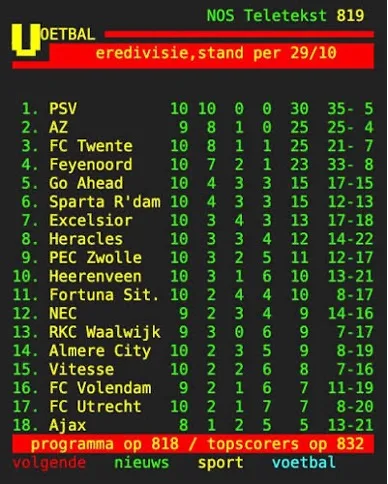
Or perhaps the team seems to function fine at first sight, but you have a strong suspicion that there is much more in it. This team has more potential. Ajax in the bottom half of the table, so to speak. That should not happen either. (But it is funny, sorry Amsterdam.)
It starts with understanding what is really happening within the team
And that sounds simpler than it is. Because if you do not know what the cause is, there is a risk that you apply a perfectly good solution to the wrong problem.
Suppose a team shows little initiative. The quick conclusion could be:
“They need to take more ownership.”
But why is that not happening?

Perhaps people do not know what is expected of them at all. Perhaps roles are unclear. Perhaps decisions are ultimately always taken by the manager anyway. Perhaps team members took the initiative before and got their fingers burnt. Or perhaps there is simply no trust that colleagues will keep their part of the agreement.
The visible behaviour is the same. The cause can be completely different.
That is why: measuring is knowing
That is why we measure team dynamics. The purpose of measuring is very practical: making visible where the collaboration runs well and where something is probably holding the team back.
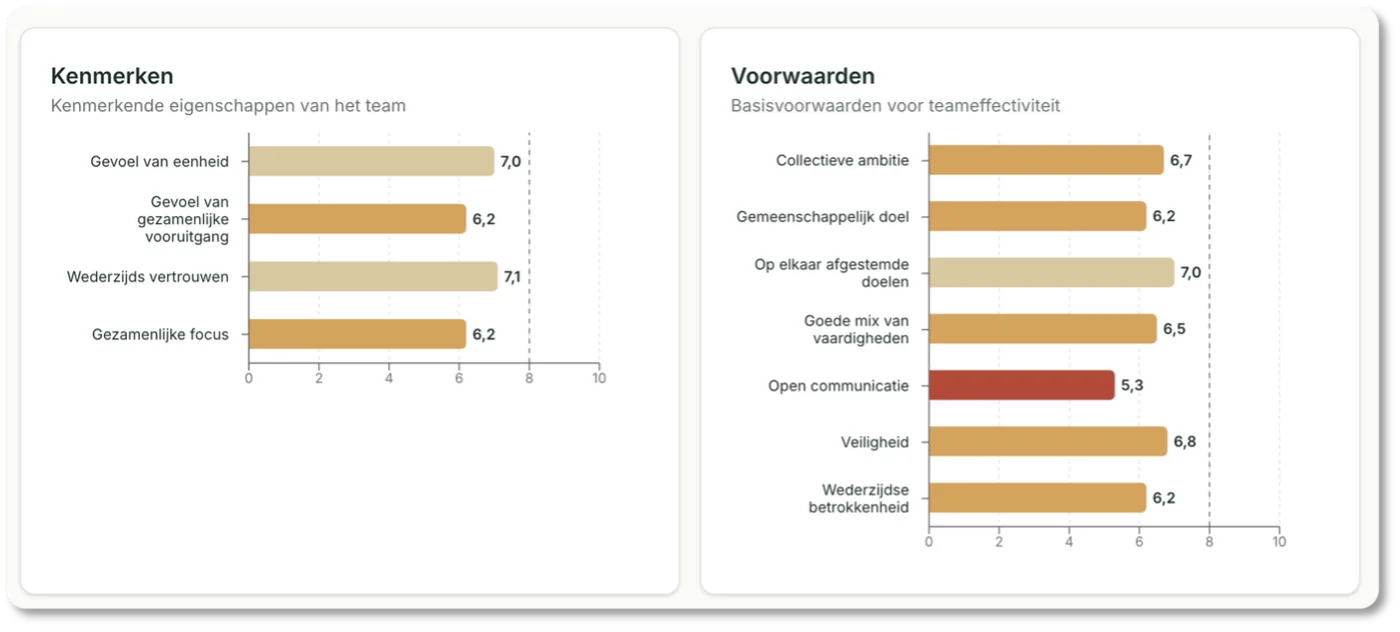
We do this with a scientifically validated questionnaire and look at the four characteristics and seven prerequisites of TeamFlow discussed in the previous two articles. This produces a clear picture of the team dynamics.
Buuuut... data do not tell the whole story
A score of 5.3 on, say, open communication does not tell you why that communication is lagging. The measurement says: we need to take a good look at this.
- Why do team members experience it this way?
- What happens in meetings?
- Which information is not being shared?
- Who takes decisions?
- Can team members hold each other accountable?
- Have there been events that made people more cautious?
So a measurement does not replace the conversation. The measurement provides input for a conversation. That distinction matters, because in our view team development ultimately remains people work.
Data help us see where to begin.
And then: get to work!
Now that we have a good picture of where the team is leaking energy, we can actually do something about it. Because we know what the team needs, we can determine precisely which intervention fits best.
The intervention follows the issue. Not the other way around.
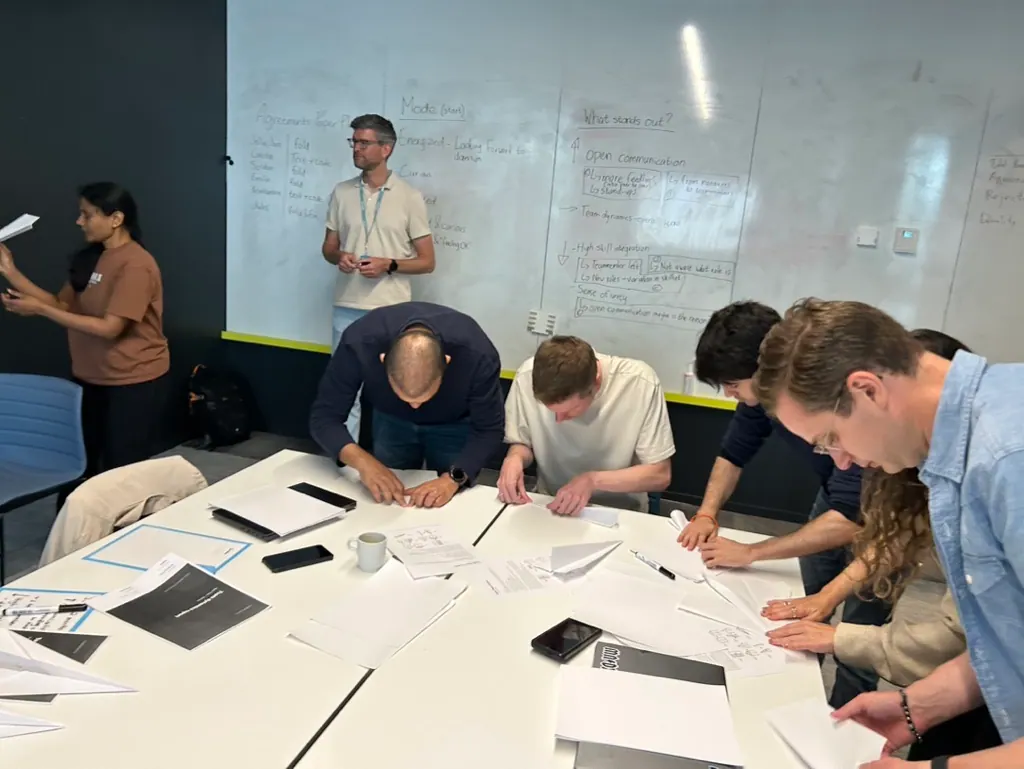
The teams are in the driving seat, they come up with the solutions themselves. We merely facilitate. The agreements that are made must be concrete and workable. It must also be clear who does what. For example.
During a workshop the joint decision is:
“We need to communicate more openly.”
Everyone agrees, but will anyone actually do something different on Tuesday morning? No, I do not think so either.
That is why we help a team with this.
“For every action we name one owner and a date on which we report back” instead of “We are going to show more ownership”. Well, I think the point is clear.
Team development only becomes interesting when fine words are translated into visible behaviour. And that may well be the hardest part.
Anchoring new behaviour within the team
Because suppose you do everything right.
- You have measured the team dynamics.
- You have made a good analysis.
- You organise an excellent workshop.
- Energy emerges.
- People speak up.
- New insights are gained.
- Three concrete agreements hang on the wall.
- Everyone goes home enthusiastic.
Mission accomplished? Unfortunately, not yet. Because now comes a phenomenon that almost everyone who has ever attended a team training will recognise.
On Monday people still talk about it. Tuesday perhaps too. But about three weeks later the daily business has completely taken over everyone’s calendar again and everyone is back to doing what they did before.
And that fantastic workshop three weeks ago? What was it we agreed again...
Developing team dynamics is a cycle
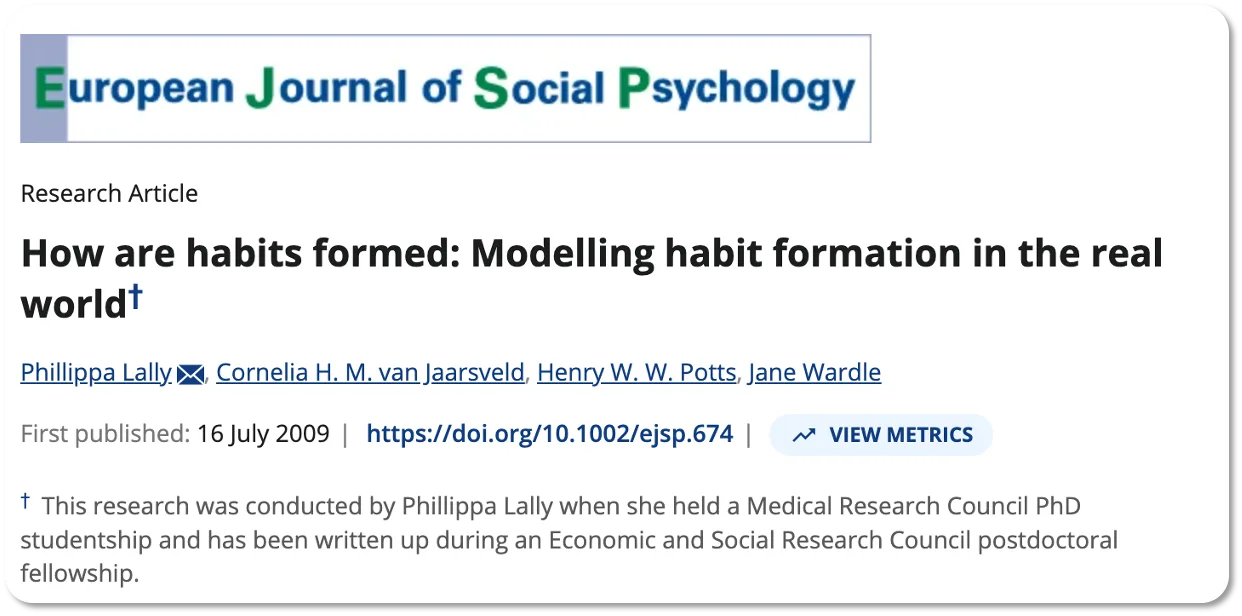
Have you ever tried to change something about your own behaviour? Scrolling less on LinkedIn, for instance? Unfortunately, the 21 days you often hear about are nowhere near enough. Research shows it is more like 66 days to learn new behaviour.
Imagine what that means when you want a whole team to learn new behaviour!
A good training, an away day or a team outing is great fun and important, but the chance that it achieves your goal of improving team dynamics is next to nil.
That is why, as far as we are concerned, team development is not an event. It is a cycle. At TeamPacer we use the PACE approach for this:
- Poll. We measure how the team currently experiences the collaboration.
- Analyse. We examine where things run well, where they grate and what is probably behind it.
- Concretise. The team translates that insight into a limited number of concrete improvement actions.
- Evolve. The team applies these actions and measures again later.
And then the cycle starts all over again. The last part may well be the most important. Because only at a next measurement can you answer an interesting question:
Has anything really changed?
This is where insight plays an important role
To be able to follow that development properly, we developed TeamInsights. This is the digital platform that allows organisations to measure their team dynamics and follow them over a longer period.
Teams complete the measurements. Results are presented clearly. Reports are built up. Earlier and new measurements can be compared. And team agreements can be recorded.
For a team manager this means that team development does not disappear as soon as the trainer walks out the door. For HR or a director it also becomes possible to see, across several teams, where developments are taking place and where extra attention may be needed.
- Which prerequisites play a role in several teams?
- Where do we see structural improvement?
- Which interventions seem to have an effect?
- Where is a team actually slipping back?
- And where is support perhaps needed again?
This makes team development far less dependent on impressions and isolated moments.
And the nice thing is: you do not even need TeamPacer for that
That may sound like a strange sentence in an article by TeamPacer, but it is important. Many large organisations already have excellent coaches, trainers and HR professionals. Other organisations work with regular training agencies or preferred suppliers.
That is perfectly fine. I am happy whenever an organisation pays attention to the development of its own teams.
TeamInsights can provide these organisations with the underlying measurement infrastructure. The organisation stays fully in control and decides for itself:
- who guides the teams
- which interventions are used
- which trainers are brought in
- when a new measurement takes place
- and what happens with the results
TeamInsights helps to establish the starting point and then to make visible whether the chosen approach really has an effect.
That makes the platform interesting for organisations that are not looking for yet another training agency, but do want to know much better what their investments in team development deliver.
And if you do want help with the intervention?
Then TeamPacer comes into the picture. We are happy to help. Insight tells you where to look, but sometimes you need expertise to then get to work with it properly. That is why we do not work with one trainer who brings the same toolbox to every problem.
We look at the issue and find the right expertise to match.
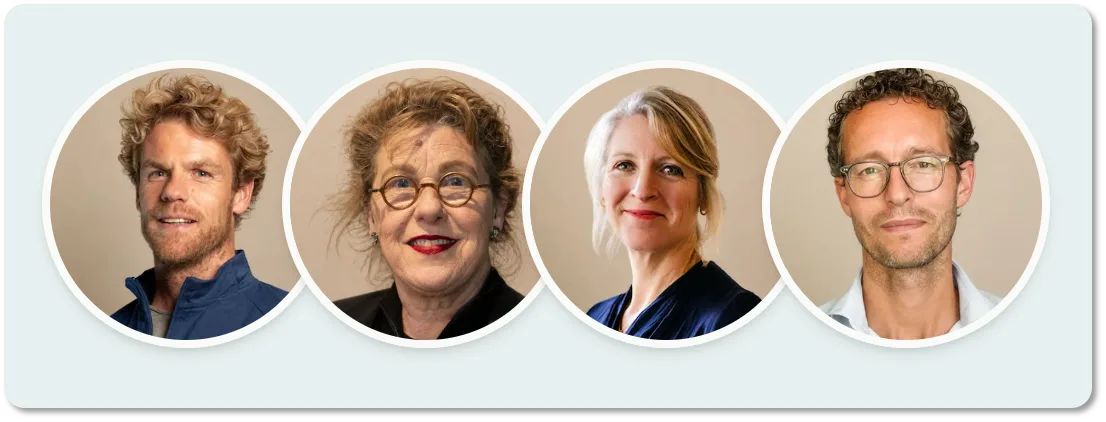
TeamPacer works with various trainers, coaches and Pacers who each look at teams from their own background.
In the end, the team itself stays in the driving seat
That may well be the most important principle of our approach. A trainer does not come to tell a team how it should collaborate from now on.
We make visible what is going on. We help the team understand why it happens. We bring in expertise when needed. We help turn insights into concrete actions. And we make sure there is a fresh look at whether those actions really change anything.
But the team does the work!
That brings us full circle
In part 1 we started with Mihaly Csikszentmihalyi and the individual experience of flow.
Then we made the step to TeamFlow and its four characteristics: holistic focus, mutual trust, a sense of joint progress and a sense of unity.
In part 2 we explored the seven prerequisites that increase the chance of that experience: collective ambition, a common goal, aligned personal goals, high skill integration, open communication, safety and mutual commitment.
And in part 3 everything comes together.
Team development is not a matter of a one-off barbecue. Or a survival day. Not a single training or a workshop on better communication.
Team development is working very systematically on the conditions under which teams can function optimally.
TeamInsights makes team dynamics measurable and follows their development over time.
TeamPacer helps teams when there is a need for guidance, with the right expertise for the right issue.
Together when needed. Separately when that fits better. Because in the end the training is not the goal. Nor is the measurement. We go for structurally improving team dynamics.
We go for teams in top form!
Ready to start measuring?
With the TeamPacer Quick Scan you measure in a short time how your team scores on the characteristics and prerequisites for TeamFlow. The first step of the PACE cycle, with no strings attached.
Discover the Quick ScanSources and further reading
Lally, P., van Jaarsveld, C. H. M., Potts, H. W. W. and Wardle, J. (2010). How are habits formed: Modelling habit formation in the real world. European Journal of Social Psychology, 40(6), 998–1009.
Van den Hout, J. J. J. and Davis, O. C. (2019). Team Flow: The Psychology of Optimal Collaboration. Springer.
Van den Hout, J. J. J., Davis, O. C. and Weggeman, M. C. D. P. (2018). The conceptualization of team flow. The Journal of Psychology, 152(6), 388–423.
This article builds on the TeamFlow theory of Dr Jef van den Hout. TeamFlow® and Flow Concepts® are registered trademarks. TeamPacer applies this theory and the associated measurement instruments in consultation with and with the permission of the rights holder.